


Amalaki in Ayurveda: Traditional Uses, Benefits & Daily Routine
 2026 October 27
Amalaki, also known as Amla or Indian Gooseberry, is a fruit traditionally valued in Ayurveda. It is known botanically as Phyllanthus emblica and is an important ingredient in classical preparations such as Triphala and Chyawanprash. Ayurveda describes Amalaki through its Rasayana classification, traditional properties, relationship with the Doshas and place in daily dietary routines.
From fresh fruit to powder and tablets, Amalaki has been used in different forms throughout Ayurvedic history. Understanding its traditional background, preparation methods and suitability can help you explore its place in an Ayurvedic-inspired lifestyle.
What Is Amalaki and What Role Does It Play in Ayurveda?
Amalaki is the Sanskrit name for Amla, a fruit obtained from the tree Phyllanthus emblica. Commonly known as Indian Gooseberry, it has an important place in traditional Ayurvedic nutrition and classical herbal preparations.
The tree is native to tropical and subtropical parts of Asia, including India, where the fruit has long been used in food and traditional formulations.
Amalaki is also traditionally called Dhatri, a Sanskrit term meaning nurturer or one who nourishes.
Is Amalaki the Same as Amla?
Yes. Amalaki and Amla refer to the same fruit.
Amalaki is the Sanskrit name frequently used in Ayurvedic literature, while Amla is a common name used in India and in everyday food discussions.
Other names include:
|
Name |
Meaning or context |
|
Amalaki |
Traditional Sanskrit name |
|
Amla |
Common Indian name |
|
Indian Gooseberry |
Common English name |
|
Phyllanthus emblica |
Accepted botanical name |
|
Emblica officinalis |
Botanical synonym |
|
Dhatri |
Traditional Sanskrit name associated with nourishment |
Why Is Amalaki Important in Ayurvedic Tradition?
Amalaki occupies an important place in Ayurveda because it appears in traditional dietary discussions and classical formulations.
Ayurvedic texts describe Amalaki as a Rasayana Dravya, a substance belonging to the traditional Rasayana category.
Rasayana is a branch of Ayurveda historically associated with concepts of rejuvenation, nourishment and longevity.
Amalaki also appears in well-known preparations such as:
-
Triphala: A traditional combination of Amalaki, Haritaki and Bibhitaki.
-
Chyawanprash: A classical preparation containing Amalaki alongside numerous other ingredients.
These uses reflect Amalaki's long-standing importance in Ayurveda rather than demonstrating specific medical effects.
What Is Amalaki Traditionally Used for in Ayurveda?
Classical Ayurveda describes Amalaki in relation to Rasayana practices, dietary routines and the traditional understanding of bodily nourishment.
Amalaki appears in discussions of Rasayana, Dhatus, Agni and the three Doshas.
The Charaka Samhita discusses Amalaki in Rasayana preparations and places it within the traditional category of Vayasthapana, associated in classical terminology with ageing and vitality.
These descriptions belong to the traditional Ayurvedic framework and should not be interpreted as clinically established anti-ageing or therapeutic effects.
What Is the Role of Amalaki in Rasayana?
Rasayana is a traditional Ayurvedic concept concerned with nourishment and long-term care within the classical system.
Amalaki is among the ingredients historically discussed in this context.
The term Rasayana Dravya describes an ingredient classified within this traditional category.
In modern discussions, it is important to distinguish this historical classification from scientifically demonstrated effects on ageing or health.
How Is Amalaki Connected With Agni and Dhatus?
Ayurvedic literature uses the term Agni to describe digestive capacity within its traditional theoretical framework.
Dhatus refers to the seven bodily tissues described in classical Ayurveda.
Amalaki is discussed in relation to these concepts as part of broader traditional descriptions of nutrition and daily living.
These concepts provide useful historical context for understanding Ayurvedic practice but are not direct equivalents of modern medical measurements.
Why Is Amalaki Included in Traditional Ayurvedic Routines?
Amalaki is a versatile fruit that can be prepared in several ways.
It may be used as a fresh fruit, in culinary preparations or as an ingredient in traditional formulations.
The way it is included in a routine depends on the form, preparation method, individual preferences and the broader dietary context.
What Traditional Properties Are Associated With Amalaki?
Ayurveda classifies Amalaki through a framework known as Rasa Panchaka, which describes ingredients according to traditional taste, qualities, potency and post-digestive characteristics.
These classifications are central to classical Ayurvedic understanding.
What Is the Rasa Panchaka of Amalaki?
|
Ayurvedic classification |
Traditional description |
|
Rasa (taste) |
Amla, Madhura, Kashaya, Tikta and Katu |
|
Guna (qualities) |
Guru and Ruksha |
|
Virya (potency) |
Sheeta |
|
Vipaka (post-digestive effect) |
Madhura |
|
Dosha relationship |
Traditionally described as Tridoshahara, with particular emphasis on Pitta |
Rasa: The Five Tastes of Amalaki
Amalaki is traditionally described as having five tastes:
-
Amla: Sour
-
Madhura: Sweet
-
Kashaya: Astringent
-
Tikta: Bitter
-
Katu: Pungent
Its sour taste is particularly noticeable when the fresh fruit is eaten.
In classical Ayurveda, taste is one of several factors used to describe the traditional qualities of foods and herbs.
Guna: Guru and Ruksha
The traditional qualities associated with Amalaki include:
Guru: Heavy
Ruksha: Dry
These are Ayurvedic classifications rather than measurements of a food's physical weight or moisture content.
They help explain how ingredients are described within classical Ayurvedic theory.
Virya: Sheeta or Cooling Potency
Amalaki is traditionally described as having Sheeta Virya, meaning cooling potency.
This is one of its distinctive classifications in Ayurveda because the fruit has a predominantly sour taste but is described as cooling within the traditional framework.
The term cooling potency does not mean that Amalaki has been demonstrated to lower body temperature.
Vipaka: Madhura or Sweet Post-Digestive Effect
Amalaki is traditionally described as having Madhura Vipaka, meaning a sweet post-digestive effect.
Vipaka is a classical Ayurvedic concept describing how an ingredient is categorised after digestion.
It is not equivalent to the fruit's actual sugar content or a measured metabolic effect.
How Is Amalaki Traditionally Related to the Three Doshas?
Amalaki is often described as Tridoshahara in classical Ayurveda.
The term refers to its traditional classification in relation to Vata, Pitta and Kapha.
Ayurvedic literature places particular emphasis on Amalaki's relationship with Pitta because of its traditional Sheeta Virya and Madhura Vipaka descriptions.
These relationships are part of Ayurvedic theory and should not be interpreted as evidence that Amalaki corrects a medically established imbalance.
What Benefits Are Traditionally Associated With Amalaki?
In Ayurveda, discussions of Amalaki's traditional benefits are rooted in classical terminology rather than modern clinical claims.
The following terms help explain why the fruit has attracted attention in Ayurvedic literature.
|
Classical term |
Traditional Ayurvedic meaning |
|
Rasayana |
Associated with classical concepts of rejuvenation and nourishment |
|
Vayasthapana |
Associated with classical concepts relating to ageing and vitality |
|
Chakshushya |
A traditional classification relating to the eyes |
|
Tridoshahara |
Describes its classical relationship with Vata, Pitta and Kapha |
|
Dhatu nourishment |
Part of the Ayurvedic theoretical framework concerning bodily tissues |
Rasayana: Traditional Rejuvenation Concepts
Classical texts include Amalaki in Rasayana discussions.
The concept of Rasayana has historically been associated with nourishment, rejuvenation and long-term lifestyle practices.
This traditional association does not establish that Amalaki reverses ageing or produces medically measurable rejuvenation.
Vayasthapana: Traditional Concepts of Ageing
Amalaki is mentioned within the Vayasthapana category in classical Ayurvedic descriptions.
This category reflects how Ayurveda historically classified certain substances in relation to ageing.
It should not be confused with scientifically established anti-ageing effects.
Chakshushya: A Classical Ayurvedic Term
Ayurvedic literature also describes Amalaki using the term Chakshushya.
This term reflects a traditional association with the eyes.
It is not evidence that Amalaki improves eyesight or treats eye conditions.
Tridoshahara: Traditional Dosha Classification
The term Tridoshahara describes Amalaki's place within classical discussions of the three Doshas.
This classification is especially relevant when studying how Ayurveda approaches individual constitution and ingredient selection.
What Does Modern Nutrition Say About Amla?
Beyond its Ayurvedic background, Amla is a fruit containing naturally occurring plant compounds.
Fresh Amla is recognised as a source of vitamin C and contains polyphenols.
However, nutrient content can vary depending on the fruit, growing conditions, processing and product format.
Fresh fruit, dried powder and processed supplements should not automatically be assumed to contain identical amounts of vitamin C or other compounds.
Traditional Ayurvedic descriptions and modern nutritional research are different forms of knowledge. The presence of nutrients or plant compounds does not, by itself, establish that Amalaki prevents, treats or cures disease.
How Can You Include Amalaki in Your Daily Routine?
Amalaki can be included in everyday life as fresh fruit, culinary preparations, powder or a food supplement.
The most suitable option depends on personal preference, the product format, dietary requirements and individual circumstances.
Traditional Ayurveda also considers concepts such as Prakriti, Agni and individual suitability.
1. Include Fresh Amla in Your Diet
Fresh Amla can be incorporated into traditional food preparations.
Because the fruit has a distinctly sour and astringent taste, it is often combined with other culinary ingredients.
Depending on personal preference, it may be used in:
-
Traditional fruit preparations
-
Chutneys
-
Cooked dishes
-
Regional Indian recipes
-
Seasonal food preparations
Fresh Amla is a food ingredient and can be enjoyed as part of a varied diet when suitable.
2. Explore Amalaki Powder
Amalaki powder is made from dried Amla fruit.It offers a different format from fresh fruit and can be measured according to the product's instructions.
Some people prefer powdered ingredients because they are easy to store and incorporate into selected food preparations.
If using an Amalaki supplement powder, follow the recommended serving instructions rather than treating it as an unrestricted culinary ingredient.
3. Consider Tablets or Capsules
Amalaki is also available in tablet and capsule form.These formats are convenient for people who prefer pre-measured portions or want an option that is easy to carry while travelling.
Different products may contain different concentrations, additional ingredients or recommended serving amounts.
Always check the label before use.
Amalaki Natural (Amla Fruit)
View Product Details
4. Explore Traditional Formulations Containing Amalaki
Amalaki is one of the ingredients in several classical Ayurvedic preparations.
Two well-known examples are Triphala and Chyawanprash.
Triphala contains three fruits:
-
Amalaki
-
Haritaki
-
Bibhitaki
Chyawanprash is a traditional multi-ingredient preparation in which Amalaki has an important place.
These formulations differ from single-ingredient Amalaki products and should be considered separately when reviewing ingredients and directions for use.
Can You Include Amalaki Every Day?
Fresh Amla may be included in a balanced diet according to personal tolerance.
For concentrated powders, tablets or capsules, daily use should follow the product instructions and individual circumstances.
There is no single preparation or quantity that is suitable for everyone.
Which Forms of Amalaki Can You Choose for Your Routine?
Amalaki is available in different formats, including fresh fruit, powder, tablets, capsules and traditional multi-ingredient preparations.
Each format has different practical characteristics.
|
Form |
Main characteristics |
Practical considerations |
|
Fresh Amla |
Whole fruit with a sour, astringent taste |
Suitable for food and traditional recipes |
|
Amalaki Powder |
Dried fruit in powdered form |
Flexible preparation; check serving instructions |
|
Amalaki Tablets |
Pre-measured format |
Convenient for storage and travel |
|
Amalaki Capsules |
Encapsulated preparation |
Check ingredient and serving information |
|
Triphala |
Three-fruit Ayurvedic formulation |
Contains Amalaki, Haritaki and Bibhitaki |
|
Chyawan prash |
Traditional multi-ingredient preparation |
Check the full ingredients and sugar content |
What Is the Difference Between Amalaki Powder and Tablets?
Amalaki powder and tablets differ mainly in how they are prepared and used.
Amalaki Powder
Powder offers flexibility in preparation and portioning.
It may be preferred by people who are familiar with powdered Ayurvedic ingredients.
However, the concentration and recommended quantity depend on the specific product.
Nisha Amalaki Choornam
View Product Details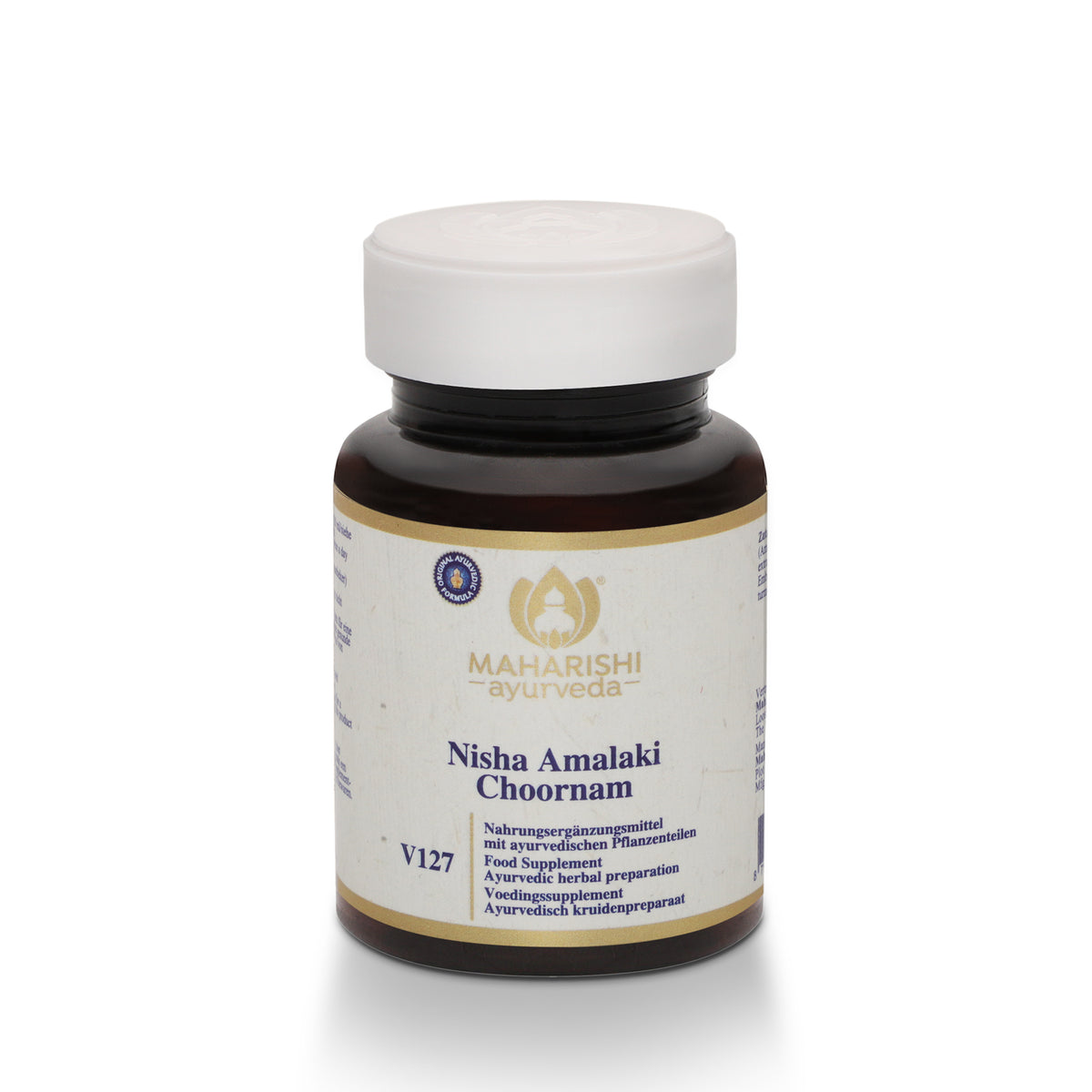
Amalaki Tablets
Tablets are convenient because they provide pre-measured portions.
They are easier to carry while travelling and do not require mixing or preparation.
However, tablet formulations can contain additional ingredients, so it is important to check the full label.
Organic Amalaki (Amla Fruit)
View Product Details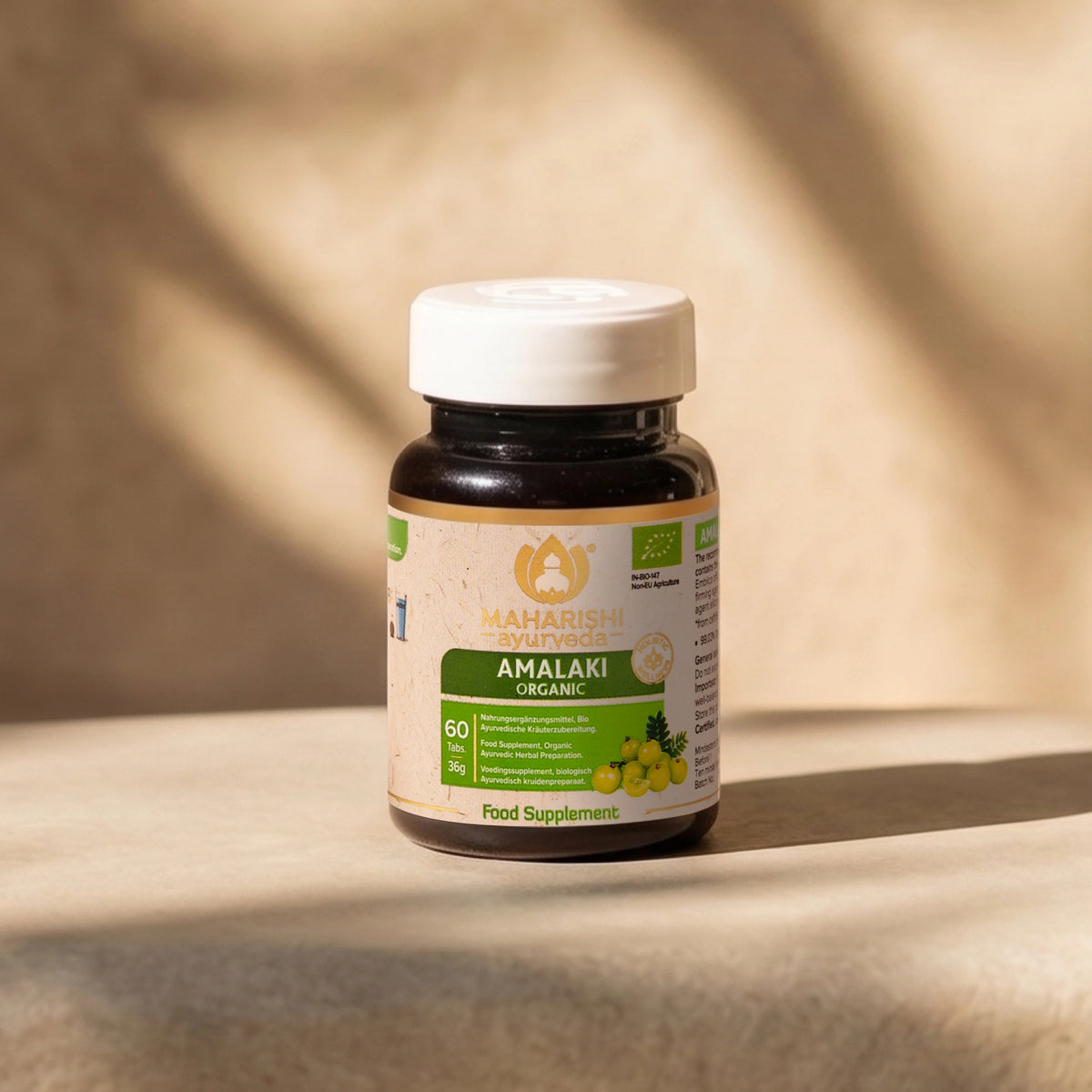
Which Amalaki Form Is Convenient for Travel?
Tablets and capsules are generally more convenient for travel because they are compact, pre-measured and easy to store.
Powder may be suitable for people who prefer traditional preparation methods, although it requires more careful measuring and storage.
What Should You Look for When Choosing an Amalaki Product?
When comparing Amalaki products, consider:
-
The botanical name
-
The part of the plant used
-
Ingredient transparency
-
Product concentration
-
Organic certification, where applicable
-
Recommended serving instructions
-
Storage requirements
-
Manufacturer quality information
-
Additional ingredients and allergens
Choosing a reputable product with clear information is more useful than relying on broad claims about its traditional benefits.
Does Amalaki Have Side Effects and What Should You Know?
Although Amla is used as a food, concentrated Amalaki supplements may not be suitable for everyone.
Some individuals may experience digestive discomfort or intolerance, particularly when using concentrated preparations.
The appropriate quantity and form depend on individual circumstances.
Can Amalaki Cause Digestive Discomfort?
Some people may experience discomfort after consuming Amla, especially in larger quantities or concentrated forms.
If a product causes unwanted symptoms, discontinue use and seek advice from a qualified healthcare professional when appropriate.
Who Should Be Careful With Amalaki Supplements?
Additional caution is appropriate for people who:
-
Have a known allergy or intolerance
-
Experience adverse reactions after using Amla
-
Take regular medication
-
Have an existing medical condition
-
Are pregnant or breastfeeding
-
Are considering supplements for children
Food supplements should not replace a balanced diet or prescribed medical treatment.
Why Should You Follow the Recommended Daily Amount?
Amalaki supplements vary in concentration and formulation.A serving of dried powder is not necessarily equivalent to a serving of fresh fruit or a tablet.
Follow the quantity stated on the product label and avoid exceeding the recommended amount.When in doubt, seek personalised guidance from a qualified healthcare professional.
Conclusion: Understanding Amalaki in Traditional Ayurveda
Amalaki, also known as Amla or Indian Gooseberry, holds an important place in traditional Ayurvedic nutrition and classical formulations.
Its historical significance is reflected in concepts such as Rasayana, Vayasthapana, Rasa Panchaka and Tridoshahara, as well as its inclusion in Triphala and Chyawanprash.
Today, Amalaki is available as fresh fruit, powder, tablets, capsules and multi-ingredient preparations.
Understanding these forms, their ingredients and their traditional background can help you make informed choices when exploring Ayurvedic-inspired food and daily routines.
The key is to distinguish classical Ayurvedic descriptions from scientifically established health effects and to choose products according to individual suitability.
Amalaki represents Ayurveda's traditional emphasis on thoughtful food choices, seasonal awareness and personalised daily routines.


